Destination wedding planner fascinated by connection & people. This blog is the home for some of my favorite things — from weddings, engagement sessions & more personal things.
Grab a cup of mocha or matcha and stay a while, won't you?
i'm mari
Planning a wedding abroad can feel overwhelming before you’ve even chosen a location.
If you’re looking for a calm, structured way to understand the process, this guide explains how to plan a wedding abroad without stress — from first decisions to feeling confident moving forward.
Start Here
Planning a destination wedding is one of the most exciting journeys a couple can take together. The idea of gathering your closest people in a beautiful corner of the world, celebrating in a setting that feels romantic, meaningful, and unforgettable, is deeply appealing.
But with that excitement often comes overwhelm.
Many couples begin with joy and inspiration, only to find themselves lost in a sea of venues, rules, timelines, and opinions. Planning a wedding abroad comes with layers that aren’t always visible at first glance.
The good news? A destination wedding doesn’t need to be stressful. With clarity, intention, and the right guidance, it can become one of the most joyful and grounded experiences of your life.
Below are the five most common destination wedding planning mistakes couples make, and how to avoid them.
Mistake 1: Starting With the Venue Instead of the Vision
One of the most common mistakes in destination wedding planning is beginning with the venue search.
Couples scroll through Instagram, fall in love with castles in France, villas in Italy, or seaside settings in Spain, and then quickly find themselves overwhelmed by endless options and conflicting advice.
The problem isn’t the venues. The problem is skipping the most important step: clarity.
Before choosing a venue, ask yourselves:
What do we want this wedding to feel like?
Who are the people we can’t imagine it without?
Do we want something intimate and slow, or lively and social?
Does a countryside setting, coastal villa, or historic estate feel most like us?
How to avoid this mistake: Start with your vision. When you define the feeling first, venue choices become clearer and far less overwhelming.
Mistake 2: Underestimating the True Costs of a Wedding Abroad
Many couples assume that planning a destination wedding will automatically cost less than hosting one at home. Sometimes it does, but more often, it’s not about lower costs, it’s about different priorities.
Destination weddings often include:
Travel and accommodation
Multi-day gatherings
Welcome dinners or farewell brunches
Guest experience elements
You’re not just planning a single day, you’re creating an experience.
How to avoid this mistake: Create a clear budget early, ideally with professional guidance. Invest in what truly matters like, venue, food, atmosphere, and guest experience, and avoid hidden costs that often appear later in the process.
Mistake 3: Overlooking Legal and Ceremony Requirements
Legal paperwork may not be the most romantic part of wedding planning, but it’s one of the most important when planning a wedding abroad.
Every country has different requirements. Some require residency, others require certified translations, and some ceremonies may not be legally recognised in your home country.
How to avoid this mistake: Understand your options early. Many couples choose a symbolic ceremony abroad for flexibility and ease, while completing the legal paperwork at home.
Your guests are travelling, often across countries or continents, to celebrate with you. While you’re not expected to cover flights or hotels, thoughtful planning makes an enormous difference.
Small gestures such as:
A welcome dinner,
A curated local guide,
Clear travel information,
Thoughtful timing of events, help guests feel cared for rather than overwhelmed.
How to avoid this mistake: Put yourself in your guests’ shoes. Ask what they need to feel comfortable, informed, and welcomed.
Practical guidance, even something as simple as attire, can help guests feel confident. This guide on what to wear to a destination wedding on the Amalfi Coast is a great example of how shared information supports the guest experience.
Mistake 5: Trying to Do Everything Alone
Perhaps the biggest destination wedding planning mistake is believing you have to manage it all yourselves.
Planning a wedding abroad involves:
International vendors
Language and cultural nuances
Contracts and timelines
Logistics across time zones
Your wedding should not feel like a full-time job.
How to avoid this mistake: Work with someone who understands destination weddings on a deep level. An experienced planner provides clarity, guidance, and calm, allowing you to enjoy your engagement instead of managing logistics.
Quick Planning Summary: How to Avoid Destination Wedding Mistakes
✔ Start with your vision, not the venue ✔ Build a budget that reflects experience, not assumptions ✔ Understand ceremony and legal options early ✔ Plan with guest comfort in mind ✔ Seek experienced guidance instead of doing it alone
FAQ — Destination Wedding Planning Mistakes
What is the biggest mistake couples make when planning a destination wedding?
Starting without a clear vision. Without understanding how you want the wedding to feel, planning decisions can become overwhelming and disconnected.
Is a destination wedding more stressful than a local wedding?
Not necessarily. With clear guidance and thoughtful planning, destination weddings can feel calmer and more intentional than traditional weddings.
Do destination weddings require legal paperwork?
It depends on the ceremony type and country. Many couples choose symbolic ceremonies abroad and complete legal paperwork at home.
How can couples make destination weddings easier for guests?
Clear communication, thoughtful timing, and small hospitality gestures help guests feel comfortable and excited to attend.
Should couples hire a planner for a destination wedding?
Most couples benefit greatly from professional guidance, especially when planning across countries, cultures, and time zones.
Final Thoughts on Planning a Destination Wedding
Your destination wedding is more than a date on the calendar. It’s the beginning of your marriage, the gathering of your loved ones, and the creation of memories in a place that reflects who you are.
Mistakes can happen, but with clarity, intention, and the right support, your wedding can feel effortless, meaningful, and deeply personal.
You deserve to look back on your day not with stress, but with gratitude and joy, being fully present, surrounded by the people who matter most.
Destination wedding planner fascinated by connection & people. This blog is the home for some of my favorite things — from weddings, engagement sessions & more personal things.
Grab a cup of mocha or matcha and stay a while, won't you?
i'm mari
Planning a wedding abroad can feel overwhelming before you’ve even chosen a location.
If you’re looking for a calm, structured way to understand the process, this guide explains how to plan a wedding abroad without stress — from first decisions to feeling confident moving forward.
The Question Every Couple Asks (But Rarely Feels Confident Answering)
Once the excitement settles and the initial decisions begin to take shape, most couples quietly ask:
Should we get married locally, or should we plan a destination wedding?
Both options can be beautiful. Both come with trade-offs. And neither is the “right” answer for everyone.
This guide is designed to help you decide with clarity without pressure, trends, or expectations shaping your choice.
Many of these questions feel easier once you understand the full planning journey. This guide to planning a wedding abroad without stress offers a clear place to start.
What a Local Wedding Really Offers
A local wedding often feels familiar and convenient. It can make planning feel simpler on the surface, especially when most guests live nearby.
Local weddings often work well if:
Most of your guests live in the same city or country
Family expectations are an important factor for you
You value convenience and accessibility for your guests
You prefer not to manage international logistics
Local weddings can be deeply meaningful, grounded, and personal, especially when designed with intention.
Want a multi-day experience rather than a single event
Value atmosphere, setting, and storytelling through location
Many couples find that a destination setting naturally creates a sense of intimacy and connection that is difficult to replicate at home.
The Real Differences (Beyond Aesthetics)
Guest Experience
A local wedding is often a single-day event. A destination wedding becomes a shared journey. Think welcome dinners, relaxed mornings, shared experiences, excursions, and meaningful moments beyond the ceremony. Seeing a real destination wedding weekend in Sicily shows how immersive multi-day celebrations can feel for both couples and guests.
Budget Allocation
Local weddings often spend heavily on décor and logistics. Destination weddings often allocate more budget toward location, guest experience, and multi-day gatherings. Neither is cheaper by default, it’s about how you prioritise.
Emotional Atmosphere
Destination weddings often feel slower, more present, and less performative. Local weddings can feel vibrant and social, with larger groups and familiar rhythms.
A Simple Way to Decide
Instead of asking which is better, ask yourselves:
Do we want a wedding day, or a wedding experience?
Do we feel energised by hosting many people, or grounded by intimacy?
Do we love the idea of travel and shared discovery with our guests?
Your answers often reveal the direction more clearly than spreadsheets or trends.
Common Myths About Destination Weddings
Destination weddings are only for huge budgets
In reality, smaller guest counts and venue inclusions can balance costs. Many couples find destination weddings comparable to high-end local weddings.
Guests won’t come
Guests who can attend often feel deeply honoured to travel and celebrate with you. And those who can’t still feel included through thoughtful planning and communication.
They’re too complicated to plan
With the right support and local expertise, destination weddings can feel surprisingly structured and calm.
How Planning Support Changes the Experience
Whether local or destination, having a guide can transform the process.
For destination weddings in particular, local expertise helps with:
Venue sourcing and contract review
Vendor curation and cultural nuances
Budget alignment across currencies and regions
Guest logistics and experience design
Many couples begin with a venue search and planning foundation, then decide whether full planning support feels right for them. Understanding planning timelines for destination weddings in Europe can also help couples feel more grounded when deciding between local and destination options.
A Calm Perspective
YYour wedding is not a trend, a checklist, or a performance. It is a reflection of how you live, what you value, and how you want to gather your people.
Local or destination, the right choice is the one that feels aligned with your relationship and lifestyle.
Destination vs Local Wedding FAQs
Is a destination wedding more expensive than a local wedding?
Not necessarily. Destination weddings often have smaller guest lists and venue inclusions, which can balance costs compared to large local weddings.
How many guests usually attend a destination wedding?
Most destination weddings host 20–80 guests, though this varies depending on location, budget, and family dynamics.
Are destination weddings worth it?
For couples who value travel, intimacy, and immersive experiences, destination weddings can feel deeply meaningful and personal.
How far in advance should you plan a destination wedding?
Most couples begin planning 12–24 months in advance to secure venues and vendors, though shorter timelines are possible.
Recommended Reading
If you’re still exploring what feels right for your wedding, these guides may help you find clarity:
Each guide is designed to help you move through planning with calm, clarity, and intention—without the noise.
The Right Choice Is the One That Feels Like You
If you’re drawn to an intimate, experience-led wedding and want guidance that feels thoughtful, calm, and tailored, support early in the journey can make all the difference.
I work with couples planning destination weddings in Europe and beyond, helping them navigate decisions with clarity, confidence, and ease.
Destination wedding planner fascinated by connection & people. This blog is the home for some of my favorite things — from weddings, engagement sessions & more personal things.
Grab a cup of mocha or matcha and stay a while, won't you?
i'm mari
Planning a wedding abroad can feel overwhelming before you’ve even chosen a location.
If you’re looking for a calm, structured way to understand the process, this guide explains how to plan a wedding abroad without stress — from first decisions to feeling confident moving forward.
Why Choosing a Wedding Venue Feels So Overwhelming
For many couples, choosing a wedding venue is the moment planning suddenly feels real.
You open Pinterest, Instagram, and Google. You fall in love with ten completely different styles in ten minutes. Everyone has opinions. Timelines feel urgent. Venues book years in advance. And suddenly, what should feel exciting feels heavy.
If you’re feeling this way, you’re not behind. You’re simply at the point where clarity matters more than inspiration.
How to Choose a Wedding Venue Without Overwhelm
Choosing a wedding venue is often the first big decision couples make, and it can quickly feel overwhelming. Between Pinterest inspiration, venue websites, and advice from friends and family, it’s easy to fall down a rabbit hole of options and opinions.
This guide will help you choose a wedding venue with clarity, calm, and intention, without pressure or second-guessing.
Before You Look at Venues, Ask Yourself This
Before scrolling through endless options, pause and step back.
How Do You Want It to Feel?
Do you imagine something intimate and grounded? Or energetic and social? Quiet and refined, or layered with movement and music?
Your venue should support the feeling you want, not just the aesthetic.
Who Are You Really Hosting?
Guest count changes everything. A gathering of 20 feels completely different from 150. The right venue for one may feel overwhelming for the other.
This is where your earlier budget and guest decisions begin to guide you.
Having clarity on these points will instantly narrow your options and make venue decisions feel far less overwhelming. If you’re still early in planning, you may find it helpful to start with your first 30 days after engagement before making venue decisions.
The Biggest Mistake Couples Make When Choosing a Venue
Most couples choose a venue for how it looks in photos.
Few consider:
How the day flows through the spaces
Where guests naturally gather
How sound, light, and movement shape the experience
What stress the venue removes or adds
A beautiful venue that complicates logistics can quietly increase pressure. A thoughtful venue that flows naturally can make everything feel effortless.
Local vs Destination Venues: What Changes Everything
A destination venue changes more than the backdrop. It changes:
Guest experience
Timeline and logistics
Budget distribution
Emotional atmosphere
Destination venues often allow for smaller guest counts, deeper experiences, and multiple-day gatherings, while local venues often prioritise convenience and tradition. Exploring curated wedding venues in France
There is no better choice. There is only alignment.
Questions to Ask Before You Fall in Love With a Venue
Before signing anything, ask:
What is included vs. extra?
What is the real guest capacity for dining and dancing?
What is the weather plan, and is it equally beautiful?
What restrictions exist on vendors, music, or timing?
What does this venue make easier for you?
Clarity here prevents rushed decisions later.
Venue Search, Budget Curation, and Moodboard Creation. A Calm Starting Point
For many couples, committing to full-service planning feels like a big step, especially early in the journey. That’s why I offer a focused venue search and planning foundation service, designed to help you decide with clarity before you move forward.
This includes:
Curated venue research based on your preferences, dislikes, guest count, and budget
A tailored budget framework aligned with your venue choices and priorities
A moodboard and design direction to help you visualise how your wedding could feel in each setting
During this process, I listen closely to what matters to you, how you live, what you value, and how you want the experience to unfold. I then present a carefully considered shortlist of venues that truly align with you, rather than an overwhelming list of options.
If you fall in love with a venue, I’ll guide you through securing it and handle the booking process. From there, you can choose to continue the journey together with full planning support or move forward independently with confidence.
When to Bring in a Planner (And Why It Changes Everything)
This is often the moment couples realise they don’t want to navigate everything alone.
A planner doesn’t just recommend venues. They translate your vision into practical decisions, protect your budget, and anticipate challenges before they become problems, and help you plan timelines for destination weddings in Europe.
For destination weddings especially, local expertise can transform the experience from overwhelming to grounded.
A Calm Way to Decide
Instead of asking, “Is this the perfect venue?” ask:
Does this place support the experience we want to create?
Most couples book their wedding venue 12–24 months in advance for popular destinations and 9–18 months for local weddings. For intimate weddings or off-season dates, shorter timelines are often possible.
How do you choose the right wedding venue?
The right wedding venue aligns with your guest count, budget, desired atmosphere, and logistics. Focus on how the space feels and flows, not just how it looks in photos.
Is it better to have a local or destination wedding venue?
Local venues offer convenience, while destination venues create immersive guest experiences and often allow smaller, more intentional guest lists. The best choice depends on your priorities, budget, and lifestyle.
What should be included in a wedding venue contract?
A venue contract should clearly outline exclusivity, catering requirements, rental hours, vendor restrictions, weather backup plans, and cancellation policies.
Do you need a wedding planner to choose a venue?
While not required, a planner can help you evaluate venues, negotiate contracts, and align your venue choice with your budget and vision—especially for destination weddings.
The Right Venue Should Support the Experience, Not Complicate It
If you’re planning an intimate destination wedding and want guidance choosing venues that align with your vision, values, and budget, support early in the process makes a significant difference.
You deserve a venue that feels as intentional as the experience you’re creating. If you’re still in the early planning stage, start with our guide to your first 30 days after engagement.
Destination wedding planner fascinated by connection & people. This blog is the home for some of my favorite things — from weddings, engagement sessions & more personal things.
Grab a cup of mocha or matcha and stay a while, won't you?
i'm mari
Planning a wedding abroad can feel overwhelming before you’ve even chosen a location.
If you’re looking for a calm, structured way to understand the process, this guide explains how to plan a wedding abroad without stress — from first decisions to feeling confident moving forward.
Start Here
Why Choosing Your Wedding Party Feels So Emotional
For many couples, choosing a wedding party is one of the first decisions that feels deeply personal, and unexpectedly complex.
There are friendships that span decades, family expectations, workplace relationships, and unspoken social rules. Add a destination wedding or intimate guest list, and suddenly the pressure multiplies.
If this feels heavier than you expected, you’re not alone. Choosing who stands with you isn’t about tradition, it’s about support, energy, and alignment.
There Is No Rulebook (Despite What Instagram Suggests)
Some couples choose one person. Some choose ten. Some choose none.
I’ve worked with couples who had a bridal party of eighteen, and others who chose just one person who felt grounded and steady throughout the process. Neither approach is right or wrong; both reflected what those couples needed at the time.
Your wedding party is not a performance. It’s a support system.
A Personal Reflection on Choosing from Guilt
In my own planning journey, I once chose a bridesmaid out of guilt rather than alignment. At the time, it felt like the kind thing to do. Later, I realised I needed someone who truly had my back, someone who felt calm, supportive, and present in the ways I needed.
Changing that decision was uncomfortable, but it taught me something important: your wedding party should feel like a source of strength, not obligation.
If you’re feeling unsure about someone, that intuition matters. This is one of the few moments in life where you’re allowed to choose what genuinely supports you.
Who Should Be in Your Wedding Party?
Choose Presence Over History
Long friendships are meaningful, but presence matters more. Who is showing up for you now?
Choose Support Over Obligation
Family expectations can be strong. But being close in life doesn’t always mean being the right person for this role.
Choose Energy Over Expectations
Notice how people make you feel. Calm? Energised? Drained? Your nervous system often knows before your mind does.
When Destination Weddings Change the Wedding Party Dynamic
Destination weddings naturally reshape the wedding party. Travel costs, time away from work, and personal circumstances all play a role.
Many couples choose smaller wedding parties, or none at all, destination weddings, while finding other meaningful ways to honour loved ones. This can actually remove pressure and allow everyone to participate in ways that feel sustainable.
Gentle Ways to Include People Without Making Them Bridesmaids or Groomsmen
Not everyone needs a title to feel included. Consider:
Asking someone to do a reading or toast
Inviting close friends to a private dinner or welcome gathering
Including loved ones in getting-ready moments
Creating small rituals or roles that feel personal
These gestures often feel more meaningful than formal titles.
Questions to Ask Before You Decide
Who feels grounding and supportive in stressful moments?
Who respects boundaries and your relationship?
Who would I call when I need calm, honest advice?
Who celebrates this chapter without making it about themselves?
Your answers are your compass.
Common Wedding Party Mistakes to Avoid
Choosing out of guilt or expectation
Matching numbers for symmetry
Overcrowding your wedding party
Ignoring destination logistics and travel realities
Forgetting that this is about support, not optics
Continue the Journey
This guide is part of a calm, intentional planning series for newly engaged couples:
Your Wedding Should Feel Supported — Not Performative
If you’re planning an intimate wedding and want guidance that considers both logistics and emotional dynamics, support from the beginning can make all the difference.
I work with couples who value ease, intention, and meaningful experiences, helping them plan destination weddings in Europe with clarity and care. Schedule a Consultation
Destination wedding planner fascinated by connection & people. This blog is the home for some of my favorite things — from weddings, engagement sessions & more personal things.
Grab a cup of mocha or matcha and stay a while, won't you?
i'm mari
Planning a wedding abroad can feel overwhelming before you’ve even chosen a location.
If you’re looking for a calm, structured way to understand the process, this guide explains how to plan a wedding abroad without stress — from first decisions to feeling confident moving forward.
Start Here
How to Celebrate Your Engagement Without Pressure
Right after the engagement glow settles, another question quietly appears:
Do we need to do something now?
Suddenly there are expectations. Engagement parties, dinners, trips, family gatherings, all before you’ve even had a moment to breathe. And if you’re already balancing a demanding job, a full calendar, and a busy city life, this can start to feel like yet another thing to manage. Many couples search for how to celebrate their engagement without pressure, and the truth is, there’s no single right way.
This guide is here to gently remind you:
There is no right way to celebrate your engagement, only the way that feels most like you. It’s also worth knowing that many couples don’t decide on an engagement party right away. If you’re still finding your footing, the first few weeks after getting engaged are often about slowing things down before making any decisions.
Three Ways Couples Choose to Celebrate Their Engagement
An engagement isn’t a performance. It’s a moment of connection.
You don’t owe anyone a party, a trip, or a perfectly planned announcement. Some couples want to gather everyone immediately. Others want privacy, quiet, or time to let the reality settle.
None of these choices mean you’re doing it wrong.
Before deciding what to do, ask:
Do we want to be surrounded by people or by calm?
Do we feel energised by hosting, or relieved by simplicity?
Are we craving connection, rest, or a change of scenery?
Your answers are already guiding you. Before committing to any plans, it helps to understand your budget, not to limit you, but to support the choices that matter most.
The Engagement Party
An engagement party can be beautiful when it’s aligned.
This might feel right if:
You love bringing people together
Your families are excited to meet
You enjoy hosting and celebrating socially
Gentle reminders:
This doesn’t need to be elaborate
It doesn’t need a theme, décor, or speeches
It can be as simple as drinks or a relaxed dinner
If planning a party already feels heavy, that’s information, not a failure.
An Intimate Dinner or Gathering
For many couples, a quiet dinner feels more grounding than a large gathering.
This might feel right if:
You want meaningful conversation
You prefer depth over scale
You want to mark the moment without fanfare
This could be:
A dinner with immediate family
A small circle of close friends
Even just the two of you
Simple doesn’t mean less meaningful. Often, it means more.
A Trip or Time Away Together
Sometimes, the most natural way to celebrate is by stepping away.
A short trip can give you space to:
Let the engagement sink in
Talk freely about what you want next
Reconnect outside of daily routines
This doesn’t need to be extravagant. A nearby escape, a favourite city, or a quiet countryside stay can be just as impactful.
It’s also worth knowing that many couples don’t decide on an engagement party right away.
When Destination Weddings Change the Timeline
For couples who later choose a destination wedding, the engagement party often becomes something they plan further along in the journey, not at the beginning. When not all guests are able to travel for the wedding itself, an engagement party can become a meaningful moment where friends and family come together, meet one another, and feel included in the experience, even if they won’t be at the destination.
This is one of those decisions that tends to make much more sense once you’ve had time to explore what kind of wedding experience you’re actually drawn to, local or destination and how you want your people to be part of it.
Thinking about it this way can remove a lot of pressure early on. You don’t need to decide everything now, you’re simply giving yourselves options.
How to Decide What Feels Right for You
Here’s something most articles don’t say:
How you celebrate your engagement often mirrors how you’ll want to experience your wedding.
If you’re drawn to intimacy now, that may point toward:
Smaller guest counts
Destination weddings
Experience-led celebrations
If you love gathering people early, that energy may carry into a more social, multi-event experience.
Neither is better, but noticing the pattern gives you clarity.
What Matters Most Right Now
Instead of asking what’s expected, try this:
What would feel supportive and joyful right now?
Your engagement is the beginning of a season, not a checklist.
Continue the Journey
This guide is part of a calm, intentional planning journey for newly engaged couples:
If you’re craving clarity instead of noise, and you’re drawn to an intimate, experience-led wedding, especially in Europe, you don’t have to navigate this alone.
I work with couples who value beauty, intention, and ease, guiding them through destination wedding planning with structure, warmth, and clarity from the very first decisions. Schedule a Consultation
You deserve to enjoy this season, not rush through it.
Destination wedding planner fascinated by connection & people. This blog is the home for some of my favorite things — from weddings, engagement sessions & more personal things.
Grab a cup of mocha or matcha and stay a while, won't you?
i'm mari
Planning a wedding abroad can feel overwhelming before you’ve even chosen a location.
If you’re looking for a calm, structured way to understand the process, this guide explains how to plan a wedding abroad without stress — from first decisions to feeling confident moving forward.
For many newly engaged couples, the word budget is where excitement quietly turns into stress.
You haven’t even chosen a date yet, but suddenly you’re seeing wildly different numbers online, advice that doesn’t match your lifestyle, and opinions that feel… loud. One article says you need to lock every detail immediately. Another tells you to cut everything in half.
Let’s simplify this.
This guide isn’t about rigid spreadsheets or guilt-driven decisions. It’s about understanding where your money actually goes, so you can spend with clarity, confidence, and intention without panic.
Before Numbers: One Ground Rule
Before we talk figures, there’s one important mindset shift:
A wedding budget is not about limits. It’s about priorities.
Two couples with the same total budget can have completely different experiences, depending on what they value.
So instead of asking:
“What should a wedding cost?”
We start with:
“What do we want this experience to feel like?”
That answer shapes everything.
Step One: Start With a Comfortable Range (Not a Final Number)
At this stage, you don’t need a precise total.
What you do need is a comfortable range. A number that feels realistic, not aspirational and not anxiety‑inducing.
Ask yourselves:
What can we invest without stress?
What feels aligned with our current lifestyle?
Are family contributions part of this, or not?
This range becomes your anchor. It keeps decisions grounded while still leaving flexibility.
Step Two: A Realistic Wedding Budget Percentage Breakdown
Below is a typical percentage-based breakdown for intimate and destination weddings. This isn’t a rulebook, it’s a lens.
Typical Wedding Budget Percentages
Venue & Catering: 40–50%
Food, drinks, venue hire, service staff, tables, chairs, this is often the largest investment, especially for destination weddings where the setting is part of the experience.
Photography & Videography: 10–15%
These are the memories that remain long after the day is over. Couples who value storytelling often prioritise this higher.
Planning & Coordination: 10–15%
Especially for destination weddings, this replaces stress, missteps, and decision fatigue with clarity and ease.
Design, Florals & Styling: 8–12%
This creates atmosphere: how the day feels, not just how it looks.
Fashion (Attire, Accessories, Beauty): 5–8%
This includes wedding attire, tailoring, hair, makeup, and personal styling.
Music & Entertainment: 5–8%
Live music, DJs, or curated sound experiences that shape the energy of the day.
Stationery, Celebrant & Miscellaneous: 3–5%
Invitations, ceremony elements, signage, legal fees, and small details.
(Yes, these percentages shift depending on guest count, location, and season. That’s normal.)
A Real-World Budget Comparison
Seeing percentages is helpful, but many couples want context.
I’ve created a simple budget comparison that shows how costs can look across different wedding styles and locations, including a three-day wedding in France and one-day weddings in Spain, Portugal, and Italy.
This isn’t a price list or a rulebook. It’s a perspective tool designed to help you understand how location, guest experience, and duration quietly shape the overall budget.
Before you choose these, pause for a moment. Picture how you want to feel a few days before your wedding. Calm, present, connected. Your non-negotiables should protect that feeling.
Now comes the part that brings relief.
Each of you chooses three non‑negotiables. The elements that truly matter.
For example:
Exceptional food and wine
A breathtaking location
A calm, well‑supported planning process
Photography that feels honest and timeless
When you’re clear on this, everything else becomes easier.
You’re no longer reacting to prices, you’re directing your investment.
Certain decisions quietly affect your budget more than any single line item:
Guest Count
Fewer guests often mean:
More flexibility
Higher quality experiences
Less pressure
Location
A destination wedding can sometimes reduce costs by naturally limiting guest numbers while elevating the overall experience. Venue decisions can shift your budget more than you realise, here’s how to choose one that truly feels like yours How to Choose a Destination Wedding Venue That Feels Like Yours
Season & Day
Shoulder seasons and weekday weddings often unlock better value without sacrificing beauty. Keep in mind that the time of year you choose also affects your budget. Here’s a guide on when to plan in Europe
Common Budget Mistakes to Avoid
Locking a venue before clarifying priorities
Comparing your numbers to weddings with different guest counts or locations
Underestimating the value of professional guidance
Making fear‑based cuts that affect the experience
A calm budget doesn’t restrict you, it protects what matters.
How This Sets You Up for What Comes Next
Once your budget priorities are clear, something shifts.
Suddenly, decisions like where, who, and how feel lighter.
And that’s exactly where we’re heading next.
Once you have clarity around your budget, the next step is deciding how you want to mark this season, not how Instagram tells you to.
Continue the Series
This guide is part of a calm, intentional planning journey. You can continue here:
(Each guide stands alone — read when it feels right.)
A Gentle Note
If you’re planning an intimate destination wedding and want support navigating these decisions with clarity and ease, this is exactly where working with an experienced planner makes a difference.
You deserve a process that feels as thoughtful as the day itself.
Destination wedding planner fascinated by connection & people. This blog is the home for some of my favorite things — from weddings, engagement sessions & more personal things.
Grab a cup of mocha or matcha and stay a while, won't you?
i'm mari
Planning a wedding abroad can feel overwhelming before you’ve even chosen a location.
If you’re looking for a calm, structured way to understand the process, this guide explains how to plan a wedding abroad without stress — from first decisions to feeling confident moving forward.
Start Here
Just Engaged and Feeling Overwhelmed? You’re Not Alone
Before You Plan Anything, Take a Pause
There Is No Rush
You’re engaged. You’re glowing. Your phone hasn’t stopped buzzing. And somewhere between the congratulatory messages, screenshots, and celebratory drinks, you quietly typed:
“I’m engaged… now what?”
Suddenly you’re 27 tabs deep in timelines, checklists, opinions, rules, trends, and somehow, instead of feeling excited, you feel… tired. Overstimulated. Like wedding planning has already become another demanding task on an already full life.
Let’s pause right here.
This guide is for the woman who doesn’t need more noise. She doesn’t want pressure, urgency, or a 47‑step checklist screaming at her. She wants clarity, peace, and a sense that this can actually feel calm and maybe even fun.
Think of this as a deep exhale. A clear path. A gentle, step‑by‑step way to move through your first 30 days after engagement without overwhelm, urgency, or losing the joy of why you’re here in the first place.
(Yes, you can close a few tabs now. This one can stay.)
Week One: What Actually Needs to Happen First
Share the News Your Way
Before we plan anything, we do something wildly underrated:
Nothing.
No timelines. No spreadsheets. No group chats titled “Wedding Stuff” that somehow already have opinions.
This week is about letting the moment land, because you only get to be newly engaged once.
What this week is really for:
Celebrating in whatever way feels most like you
Soaking in the happiness before it becomes a project
Noticing how you want this season to feel
If you’re both working demanding jobs, living in a busy city, and already managing a full calendar, this pause isn’t indulgent. It’s necessary.
Write Down What You Think You Want (No Filters)
Ask yourselves (over wine, coffee, or a walk and not a laptop):
Do we want something intimate or energetic?
A single beautiful day, or a multi‑day experience?
Do we want our wedding to feel like a getaway, for us and our guests?
There are no wrong answers. There is only awareness.
Week Two: Gathering Inspiration Without Losing Yourself
Limit the Noise
This is where planning begins, but not in the way the internet tells you.
This week isn’t about choosing things. It’s about choosing a direction.
Gently explore:
How do you want to feel when you wake up on your wedding day?
What moments matter most to you – food, connection, setting, atmosphere?
Do you want this to feel like a wedding… or a shared experience?
Save What Resonates, Not What Trends
Pinterest is wonderful. Until it starts convincing you that your wedding needs seventeen chairs you’ve never seen before.
Instead of saving everything, notice what keeps showing up:
Is it light and airy or rich and moody?
Coastal or countryside?
Elegant simplicity or layered, soulful details?
When inspiration starts to feel heavy, close the app. You’re not falling behind, you’re protecting your joy.
Week Three: Conversations That Shape Everything
Not glamorous, but incredibly freeing.
This week is about having the conversations that give everything else room to breathe.
The Conversations That Create Freedom
A comfortable budget range (not a final number)
Who truly needs to be there
Whether a destination wedding feels aligned with your lifestyle and values
Why Smaller Guest Counts Can Feel Better
Here’s the surprising part:
Smaller guest counts often mean less pressure, better experiences, and more intention — not less.
(And yes, it’s okay if your dream list quietly gets shorter once you imagine hosting everyone.)
If you’re dreaming of a destination wedding, this is often the moment it clicks: fewer people, deeper connection, and a setting that already does half the work.
Week Four: When Planning Starts to Feel Real (and Still Calm)
By now, things should feel lighter, not louder.
This week is about making a few thoughtful decisions that open doors, rather than locking anything in too fast.
Calm Next Steps That Open Doors
Narrow down a few locations or countries that feel exciting, not stressful
Consider seasons that suit your energy, travel preferences, and lifestyle
Begin exploring venues that feel intimate, experiential, and aligned
This is also when many couples realise something important:
They don’t want to manage this alone.
Working with a wedding planner, especially for destination weddings, isn’t about control. It’s about support, clarity, and having someone filter the noise so you don’t have to.
Common Mistakes to Avoid in the First 30 Days
Booking a venue before clarifying your vision
Comparing your timeline to others
Over-consuming Pinterest without direction
Making decisions based on pressure rather than intention
Your engagement period is not a race, it’s the foundation of your entire experience.
This Is Just the Beginning
A Calm Transition Into Planning
The first 30 days after engagement should feel exciting, grounded, and supportive, not chaotic. When you move step by step, with clarity and intention, planning becomes something you experience, not something you endure.
If you’re dreaming of an intimate destination wedding in Europe, this calm beginning matters more than you think.
Continue the Journey (Related Guides)
This guide is part of a calm, intentional planning series designed to replace overwhelm with clarity. You can continue here:
Destination wedding planner fascinated by connection & people. This blog is the home for some of my favorite things — from weddings, engagement sessions & more personal things.
Grab a cup of mocha or matcha and stay a while, won't you?
i'm mari
Planning a wedding abroad can feel overwhelming before you’ve even chosen a location.
If you’re looking for a calm, structured way to understand the process, this guide explains how to plan a wedding abroad without stress — from first decisions to feeling confident moving forward.
Start Here
This post is inspired by one of our most-saved weddings on Pinterest and a story rooted in meaning, history, and intentional connection.
How Corrin & Alec Found Their Wedding Planner
The Importance of Architecture and History
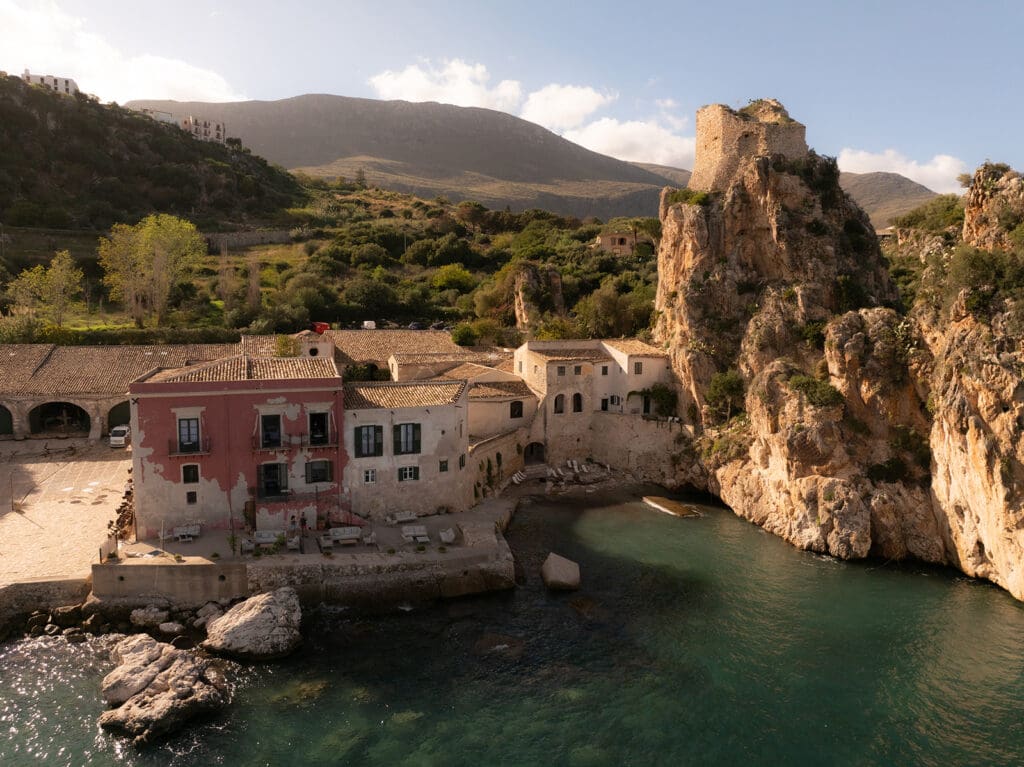
Corrin reached out with clarity and conviction. She wasn’t looking for trends or spectacle. Instead, she was searching for a feeling. From our very first conversation, it was clear that this wedding needed to hold depth, history, and emotional weight, his Tonnara di Scopello wedding, felt grounded and deeply personal that felt grounded and deeply personal.
Architecture and heritage mattered deeply to her. She shared a Pinterest board filled with Lake Como, the Amalfi Coast, and Rome, the places where historic walls speak quietly, but powerfully. What she wanted wasn’t a destination wedding for the sake of location. She wanted a place that could hold memory, symbolism, and the people closest to them.
“Mari spent endless hours on WhatsApp and Zoom calls listening to my wild ideas and piecing the more tame ones together to bring my wedding vision to life.” — Corrin
Choosing a Historic Wedding Venue in Sicily
Why This Tonnara di Scopello Wedding Was the Perfect Choice
This Tonnara di Scopello wedding felt less like an event and more like a gathering shaped by place and meaning. We searched across Europe. Spain, Croatia, France, Italy. Every option was thoughtful. Some were even meaningful in unexpected ways, including venues that shared the names of Corrin and Alec’s fathers. Meaning mattered at every step.
Then I shared a wild card: Tonnara di Scopello in Sicily, a former tuna fishery on the Sicilian coast, built in the 13th century.
Corrin was instantly drawn in. And I knew that this place held everything she was looking for. History. Emotion. A sense that the walls had witnessed love, art, and life long before us.
One moment sealed it forever. Inside one of the old fishing storerooms, the number 13 was painted on the wall — a number deeply significant to Corrin and Alec, tied to a personal achievement they hold sacred. Goosebumps followed. The wedding date? The 13th of the month. Complete serendipity.
A Multi-Day Wedding Weekend with All Guests Onsite
Designing a Wedding Around Togetherness
One of the most important elements for Corrin and Alec was time — especially for a multi-day wedding weekend in Sicily where everyone could truly be together.
Meanwhile, all 23 guests stayed onsite. No rushing. No logistics pulling people apart. Just shared moments.
Welcome Night began right on the beachfront with a pizza cart serving artisan pizzas made to order, straight from the oven. It was relaxed, joyful, and set the tone perfectly.
The following day unfolded slowly. A laid-back beach day with swimming, sunshine, and Sicilian street food served on the patio.
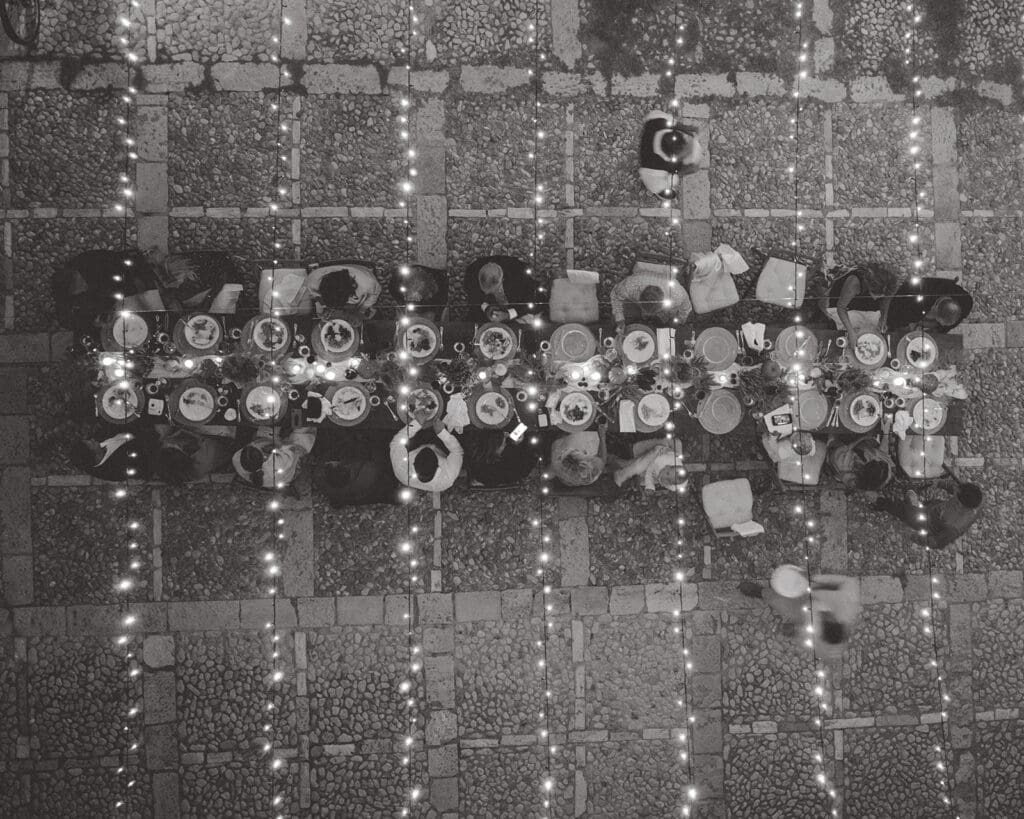
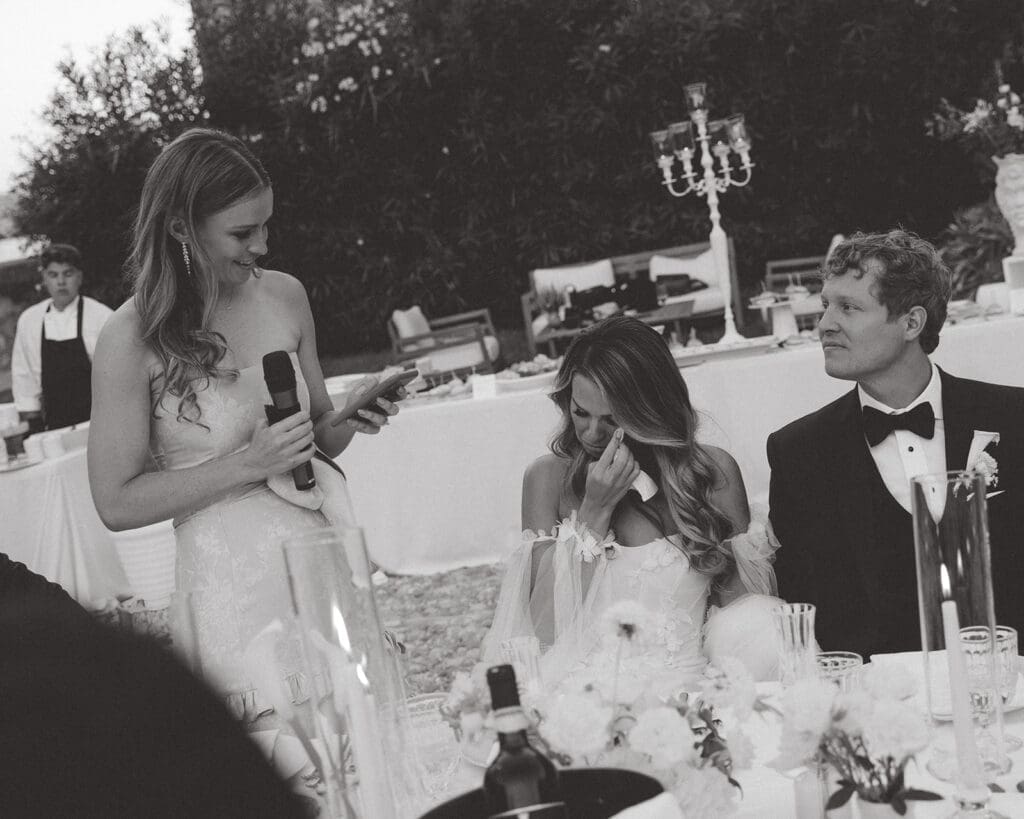
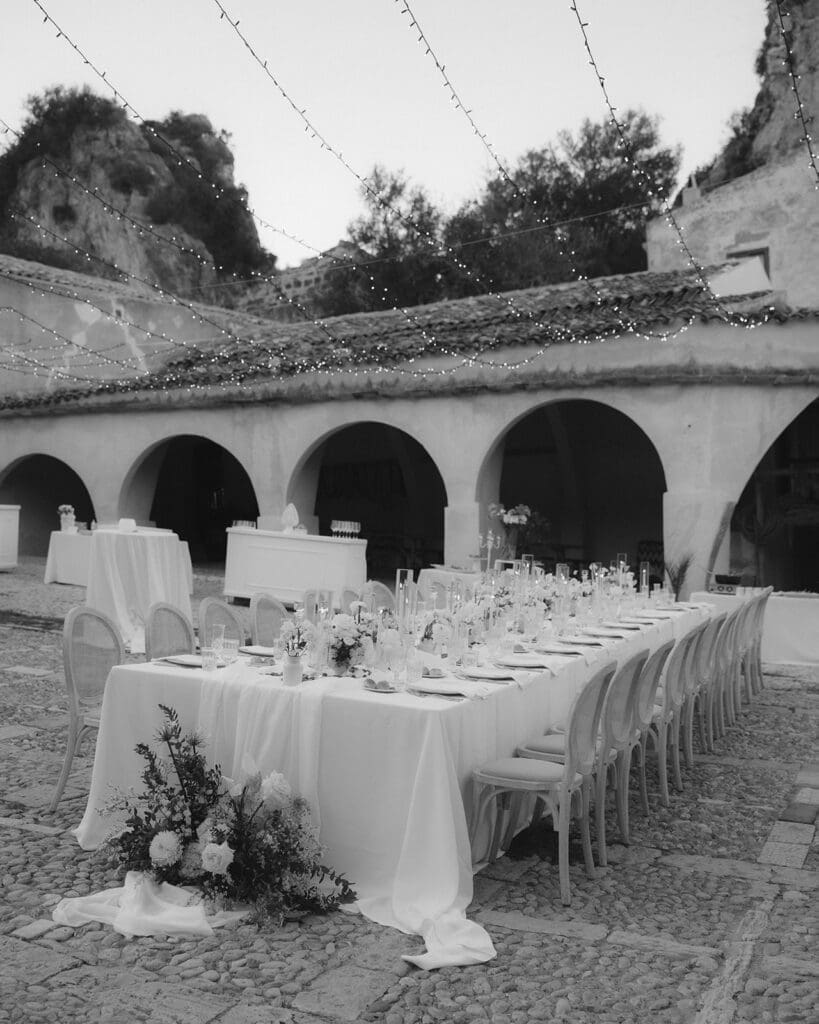
That evening, the rehearsal dinner took place in the courtyard under soft fairy lights. A traditional Sicilian buffet was prepared live in front of guests, followed by homemade gelato served from a classic cart. With such an intimate group, every guest gave a speech. Tears flowed freely. All of them rooted in love.
A Stress-Free Wedding Day Built on Trust
After two years of planning, the wedding day arrived, calm, emotional, and grounded.
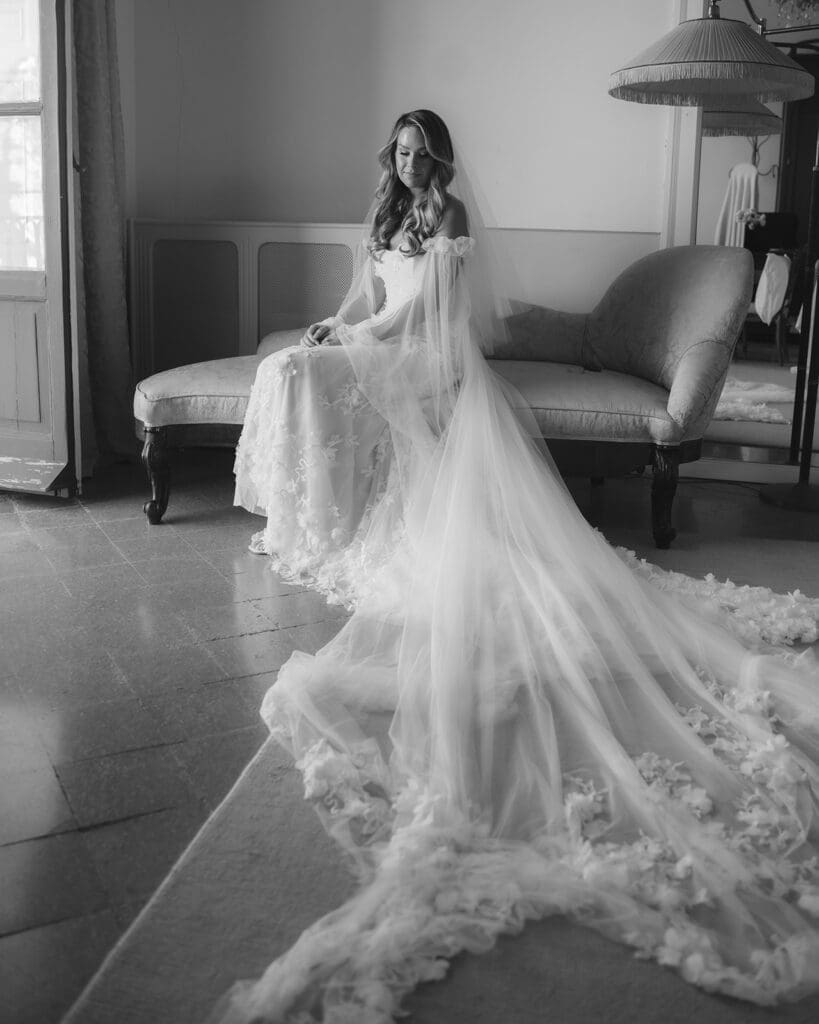
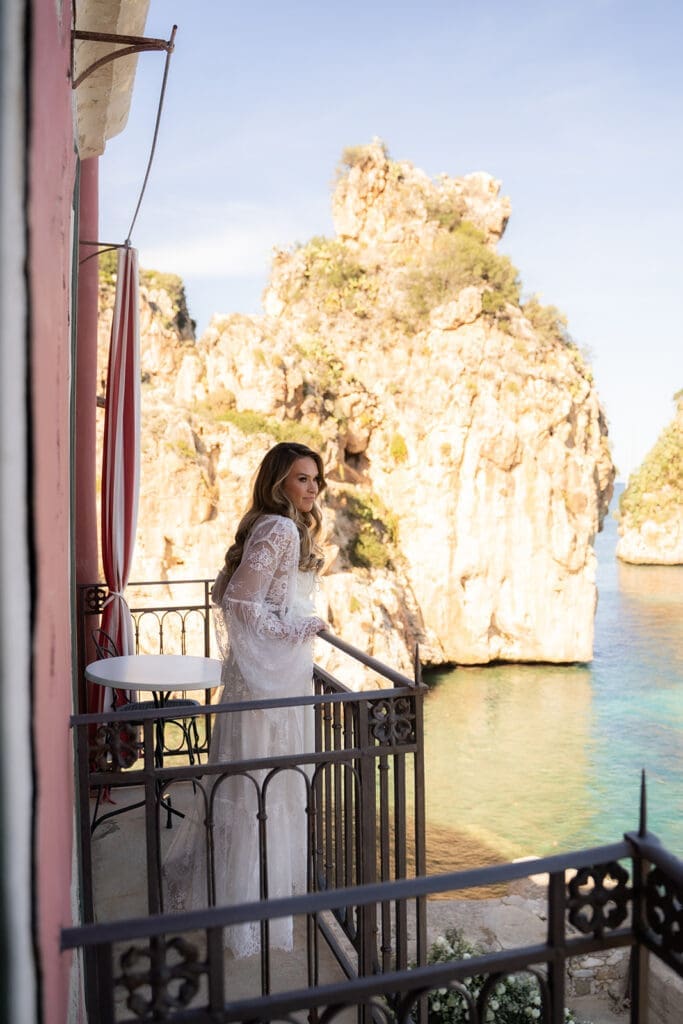
Corrin was surrounded by her favorite people. While sound checks echoed outside and florals came together, there was a quiet sense of peace in the room. She knew everything was taken care of. She could simply be present.
Out of 23 guests, 19 were part of the wedding party, because Corrin wanted every person there to feel seen and honored.
“She talked me off many a ledge and allowed me to dream big… She truly became part of our family.” — Corrin
A Meaningful Ceremony by the Sea
Every element was intentional.
The photographer was a close friend of the couple, and by coincidence, we had both lived in Cyprus at different points in our lives. Connections kept weaving themselves through the experience.
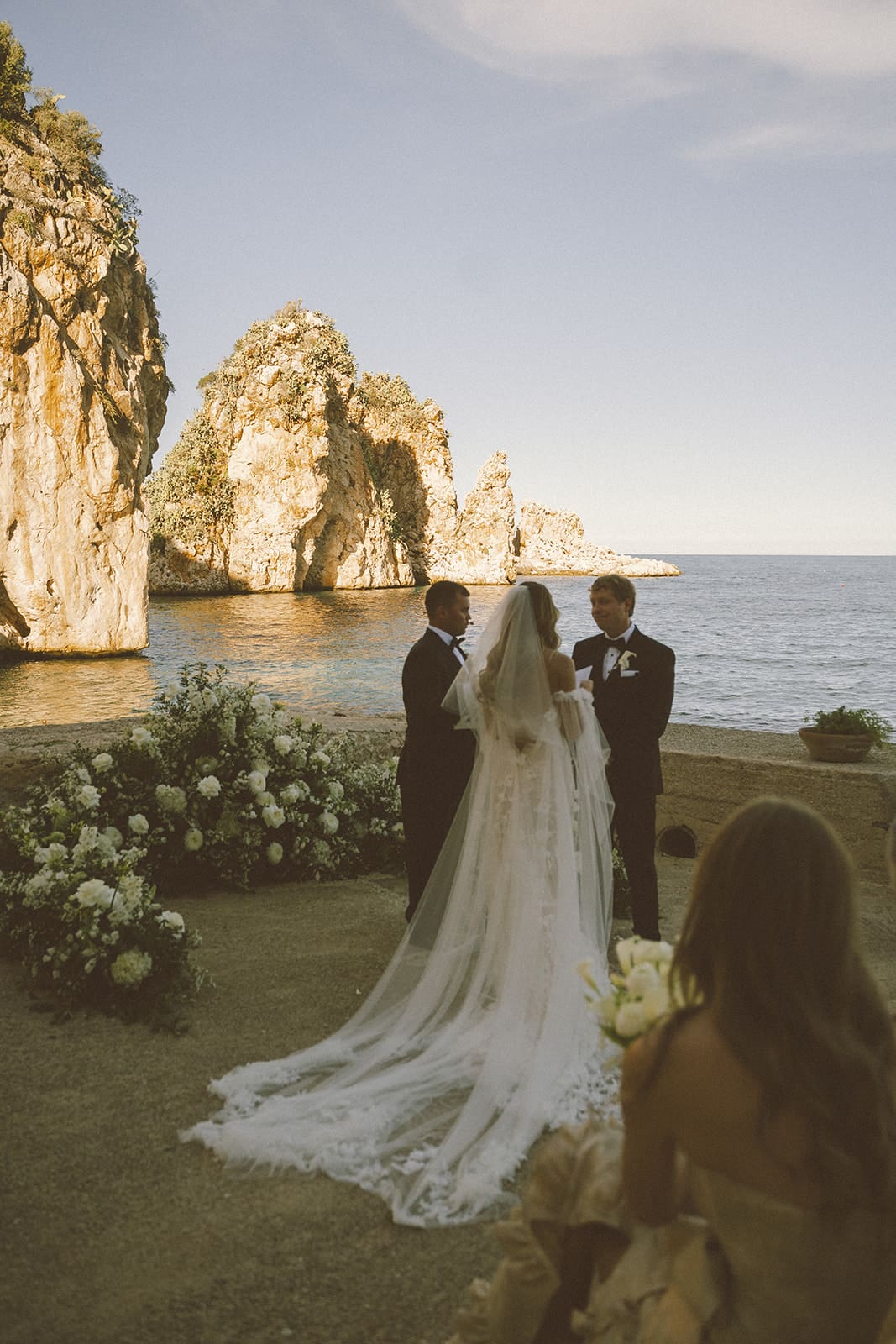
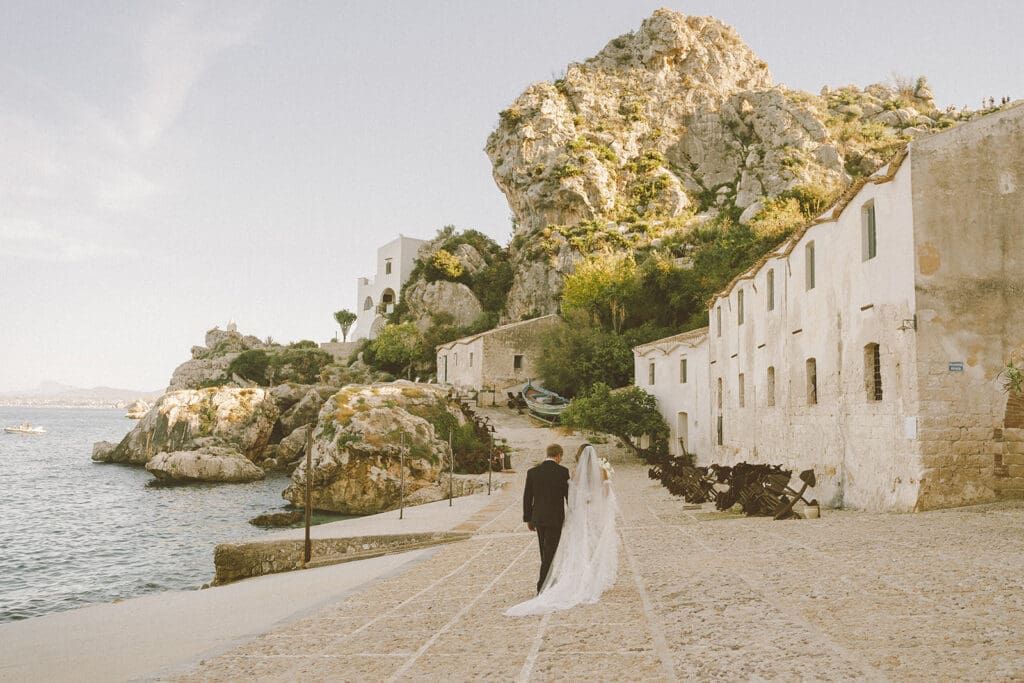
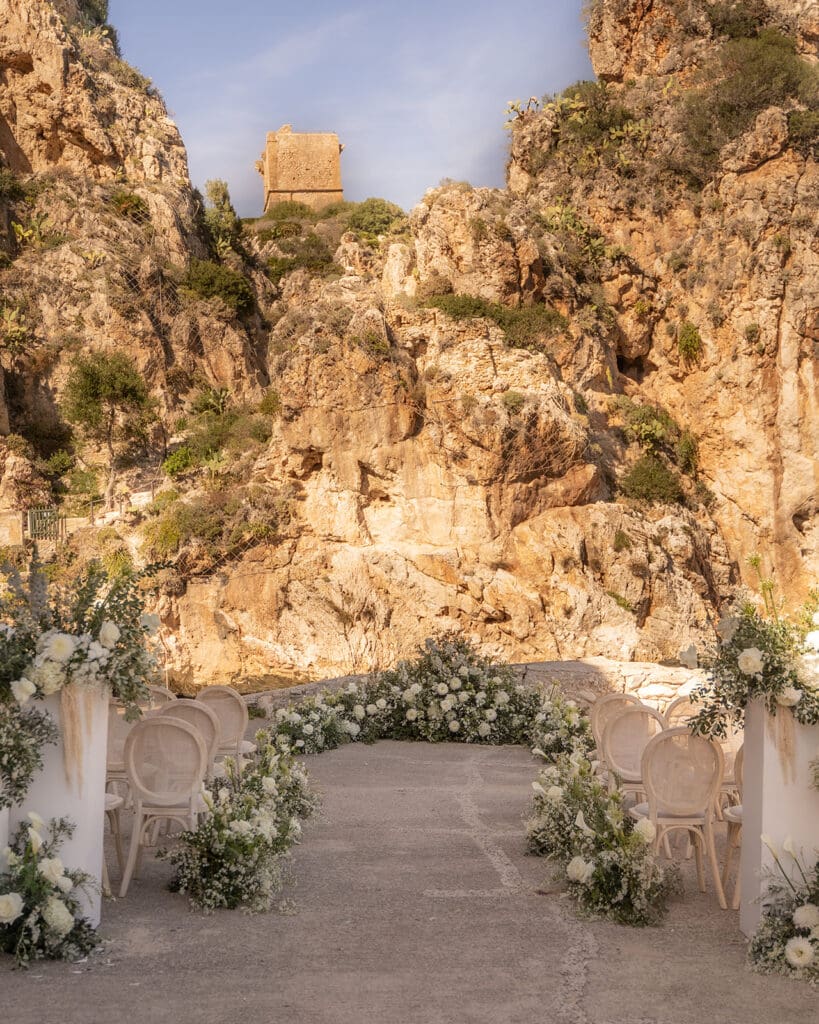
The ceremony took place by the sea. Music was specially composed and played live on a grand piano. The officiant was a family member. The vows left not a single guest untouched.
“Mari managed a multi-day wedding in a foreign country with confidence and ease.” — Photographer
Dinner, Details & Dancing Under the Stars
Dinner was a traditional Sicilian feast, prepared especially for Corrin and Alec. The wedding cake was flown in from Dubai, a personal detail reflecting Corrin’s refined, intentional taste.
The atmosphere was soft, romantic, and elegant — never forced.
As night fell, guests gathered beneath the stars. No high-energy party, no pressure. Just a lounge-style cocktail evening where conversation, music, and togetherness mattered most.
Why Intimate Destination Weddings Feel Different
Ultimately, this wasn’t a wedding built on expectations. It was built on meaning.
It honored history, family, friendship, and emotional presence. It unfolded gently. And it stayed with everyone long after the weekend ended.
“I’m so genuinely grateful for the lifelong friendship we forged in the process.” — Corrin
These are the weddings I plan. Because they live on. Not just in photographs, but in the people who experienced them.
Planning Your Own Meaningful Wedding in Europe
If you’re drawn to weddings that feel intentional, deeply personal, and rooted in place, you may find yourself here for a reason. Many of the weddings I plan follow this same intentional, multi-day wedding approach in Europe you’ll see throughout my work.
Destination wedding planner fascinated by connection & people. This blog is the home for some of my favorite things — from weddings, engagement sessions & more personal things.
Grab a cup of mocha or matcha and stay a while, won't you?
i'm mari
Planning a wedding abroad can feel overwhelming before you’ve even chosen a location.
If you’re looking for a calm, structured way to understand the process, this guide explains how to plan a wedding abroad without stress — from first decisions to feeling confident moving forward.
Planning a wedding abroad comes with a different rhythm than planning at home, and timing is everything. One of the most common questions couples ask early on is when to send save the dates for a destination wedding, especially when guests are travelling internationally.
Sending save the dates at the right time sets expectations, helps guests plan confidently, and reduces stress for everyone involved. This guide walks you through the ideal timing, what to consider before sending them, and how save the dates fit into your wider destination wedding planning timeline.
Why Save the Dates Matter More for Destination Weddings
Unlike local weddings, destination celebrations require guests to plan well in advance. Flights, accommodation, passports, visas, and time off work all take coordination and save the dates give guests the clarity they need to begin.
For destination weddings, save the dates are not just a courtesy. They are a planning tool that:
Reduces last-minute uncertainty
Signals commitment and intention
Helps guests budget and request time off
Allows families to coordinate travel together
So, When Should You Send Save the Dates for a Destination Wedding?
The general rule: 9–12 months in advance
For most destination weddings, sending save the dates 9–12 months before your wedding date is ideal.
This timeframe works well because:
Families can coordinate travel
Flights are usually available
Accommodation can be booked early
Guests can plan annual leave
When to send them earlier than 12 months
There are situations where sending save the dates 12–15 months in advance is recommended:
Guests are travelling long-haul
The destination requires visas or passports
Your wedding falls during peak travel season
You are hosting a multi-day wedding experience
In these cases, early notice is a kindness rather than over-planning.
When 6–8 months may be enough
If your guest list is small, most guests live nearby, or travel is straightforward, 6–8 months can still work, but this is best considered the minimum, not the ideal.
What Should Be Finalised Before Sending Save the Dates?
Before sending anything, make sure the following are confirmed:
What Information Should Be Included on Destination Wedding Save the Dates?
Save the dates don’t need to include every detail, but they should give guests enough information to start planning.
At minimum, include:
Your names
Wedding date
Destination (city/region/country)
A note that a formal invitation will follow
If you already have a wedding website, including the link is highly recommended so guests can check travel guidance as it becomes available.
Digital vs Printed Save the Dates for Weddings Abroad
Both options are completely acceptable, the right choice depends on your guests and your style.
Digital save the dates
Fast delivery
Eco-friendly
Ideal for international guest lists
Printed save the dates
Keepsake quality
Feels more traditional
Works well if guests expect formal stationery
Some couples choose a hybrid approach by sending a digital save the date followed by printed invitations later.
How Save the Dates Fit Into Your Overall Planning Timeline
Save the dates are just one part of the destination wedding planning journey.
A simplified timeline looks like this:
12–15 months: Save the dates (if travel is complex)
9–12 months: Save the dates (standard destination timing)
8–10 weeks before: Formal invitations
4–6 weeks before: Final RSVPs
If your ceremony type involves multiple events or cultural considerations, this can affect timing. This guide to types of destination wedding ceremonies in Europe explains how different ceremonies influence planning flow.
Helping Guests Feel Confident Saying Yes
One of the biggest benefits of sending save the dates early is confidence; guests feel informed rather than pressured.
Early notice allows guests to:
Research flights gradually
Coordinate childcare or work schedules
Decide realistically whether they can attend
This transparency leads to more thoughtful RSVPs and a calmer planning experience. For many guests, travel planning also includes practical questions like what to pack and how to dress for the destination. Sharing guidance early can help guests feel even more confident about attending.
Before sending your save the dates, check the following:
Guest list is final
Date and destination are confirmed
Venue is secured or clearly defined
Timing aligns with travel requirements
Guests have a way to access future updates
FAQ — Destination Wedding Save the Dates
When should I send save the dates for a destination wedding?
For destination weddings, save the dates are best sent 9–12 months in advance. If guests are travelling long-haul or need visas, sending them earlier can be helpful.
What information should be on a destination wedding save the date?
Include your names, wedding date, destination, and a note that a formal invitation will follow. A wedding website link is also helpful if available.
Is it okay to send digital save the dates for a destination wedding?
Yes. Digital save the dates are widely accepted and especially practical for international weddings, as long as guests receive and acknowledge them.
Can save the dates be sent more than a year in advance?
Yes, particularly for destination weddings with complex travel. Just ensure your date and location are fully confirmed.
Do save the dates replace formal invitations?
No. Save the dates notify guests early, while formal invitations are sent closer to the wedding with full details and RSVP requests
Final Thoughts on Save the Dates for Weddings Abroad
Save the dates are one of the first ways your guests experience your destination wedding, and timing them thoughtfully sets the tone for everything that follows.
When sent at the right moment, they offer clarity, respect your guests’ time, and make planning feel calm rather than rushed. Like many destination wedding decisions, this is less about rigid rules and more about intention.
If you’re planning a wedding abroad and want guidance that considers your guests as carefully as your vision, exploring thoughtful planning resources and real wedding examples is the best place to begin.
Destination wedding planner fascinated by connection & people. This blog is the home for some of my favorite things — from weddings, engagement sessions & more personal things.
Grab a cup of mocha or matcha and stay a while, won't you?
i'm mari
Planning a wedding abroad can feel overwhelming before you’ve even chosen a location.
If you’re looking for a calm, structured way to understand the process, this guide explains how to plan a wedding abroad without stress — from first decisions to feeling confident moving forward.
Europe offers an exceptional range of settings for destination weddings — from historic cities and vineyards to coastal cliffs and countryside estates. But equally important to where you marry is how you marry: the type of ceremony you choose influences your timeline, legal requirements, attire, and guest experience.
In this guide, we’ll explore the most common types of destination wedding ceremonies in Europe, what they mean, when couples choose them, and how to plan around them.
1. Civil Ceremonies (Legally Binding)
A civil ceremony is the legal marriage recognised by the government of a country. This is the type of ceremony most countries legally require before a marriage will be considered valid.
What to know:
✔ You must meet residency and documentation requirements ✔ Often held at a town hall or registrar’s office ✔ Can feel formal and administrative
Why couples choose it:
For couples who want their European wedding to also be their official legal marriage, a civil ceremony is essential. This can simplify paperwork and ensure your marriage is recognised across borders.
Religious ceremonies — Catholic, Protestant, Jewish, Orthodox, or other traditions — are meaningful for couples who want to honour their faith in the context of their wedding.
What to know:
Often follows specific religious requirements
May require pre-marital counselling or documentation
May still require a civil ceremony to be legally binding
Europe’s older churches and chapels make this a deeply atmospheric choice, but each country and denomination has its own rules that require planning.
3. Symbolic Ceremonies (Highly Customisable)
A symbolic ceremony has no legal status — but it is rich with meaning. Many international couples choose this route because it allows full creative expression without procedural restrictions.
When couples choose this:
Legal marriage completed in home country
Ceremony reflects personal vows, rituals, readings
Hosted anywhere: villa garden, vineyard terrace, seaside cliff
Not all weddings hinge on a formal ceremony. Some couples curate meaningful moments within their celebrations — a sunrise toast, a beachfront blessing, a family reading during dinner.
What to know:
Offers flexibility
Feels intimate and intentional
Can be built around your guest flow and experience
Want to see different ceremony styles in real celebrations? Explore our destination wedding portfolio for real moments that bring these ceremony types to life.
For couples looking to understand how ceremony choices fit into the wider planning process, this guide to planning a wedding abroad without stress provides helpful context.
What type of wedding ceremony can I have in Europe?
You can have a civil (legal), religious, symbolic, interfaith, or celebratory wedding ceremony in Europe. Each has different requirements and experiences.
Do symbolic ceremonies in Europe require legal paperwork?
No — symbolic ceremonies are not legally binding. Most couples complete legal marriage at home and host their symbolic celebration in Europe.
Does a destination wedding in Europe require two ceremonies?
Many couples choose a civil ceremony for legal purposes and a symbolic or celebratory ceremony for personal experience, especially when marrying abroad.
Are religious ceremonies recognised legally in Europe?
It depends on the country. Sometimes religious ceremonies must be paired with a civil ceremony to be legally recognised.
Which ceremony type is best for destination weddings?
There’s no universal “best”; symbolic ceremonies are popular for creative freedom, civil ceremonies for legal recognition, and interfaith ceremonies for blended traditions.
Final Thoughts on Ceremony Choices for European Weddings
Your choice of ceremony shapes your destination wedding experience — from how your guests dress and how long the day flows, to how meaningful each moment feels. Some couples prioritise legal recognition; others prioritise emotional expression, cultural tradition, or shared stories.
Whatever path you choose, thoughtful planning and a clear understanding of what each ceremony involves make the process feel calm, intentional, and joyful.
If you’re curious how these ceremony types look in real settings or want guidance crafting the right experience for your celebration, start by exploring our portfolio and planning resources below.